In this article 14 sections
- Why the usual rush fee falls short
- The four costs inside a rush job
- 1. Rush inputs
- 2. Changeover from re-sequencing
- 3. Absorbing the hours
- 4. A premium for the slot
- Worked example: 50 polos in three days
- Where flat percentages fail: small orders
- The three-question rule for the phone
- Can it fit without breaking a committed date?
- Are stock, artwork and approval in hand today?
- Does the fee cover the full disruption, and is this customer worth it?
- Before you tell staff to work late
- Make rush work visible

The phone rings at three on a Monday. A good customer needs 50 embroidered polos by Thursday, your board is full until Wednesday night, and you hear yourself say “leave it with us, we’ll make it work”. You do make it work. Then two other customers get their orders a day late, someone stays until eight, and the rush fee you added has disappeared into the mess.
The short answer is to price the rush from what it displaces, not just from the extra hours. Build the fee from four costs, compare it with your flat rush percentage, charge whichever is higher, and only say yes when three questions all come back yes.
Why the usual rush fee falls short
Many print and decoration shops publish a standard turnaround and charge a rush fee for anything shorter. Usually that’s a percentage of the order or a tiered surcharge that climbs as the lead time gets shorter. That’s a sensible starting point.
To take one published example, Binghamton University Print Services says it may charge a rush fee of 40% of the total order cost when the deadline is shorter than its normal minimum of three working days. It also says fees can apply when a project means rescheduling work that’s already booked. That’s one US policy, not a benchmark. It does show that disrupting booked work is part of what a rush fee pays for.
The trap is thinking of a rush only as overtime. A rush job doesn’t add hours to the day. It takes hours that already belonged to another customer, and those hours have to come from somewhere: staff staying late, other customers waiting, or a subcontractor. Each route costs something different, and the job that suffers is rarely the one being rushed.
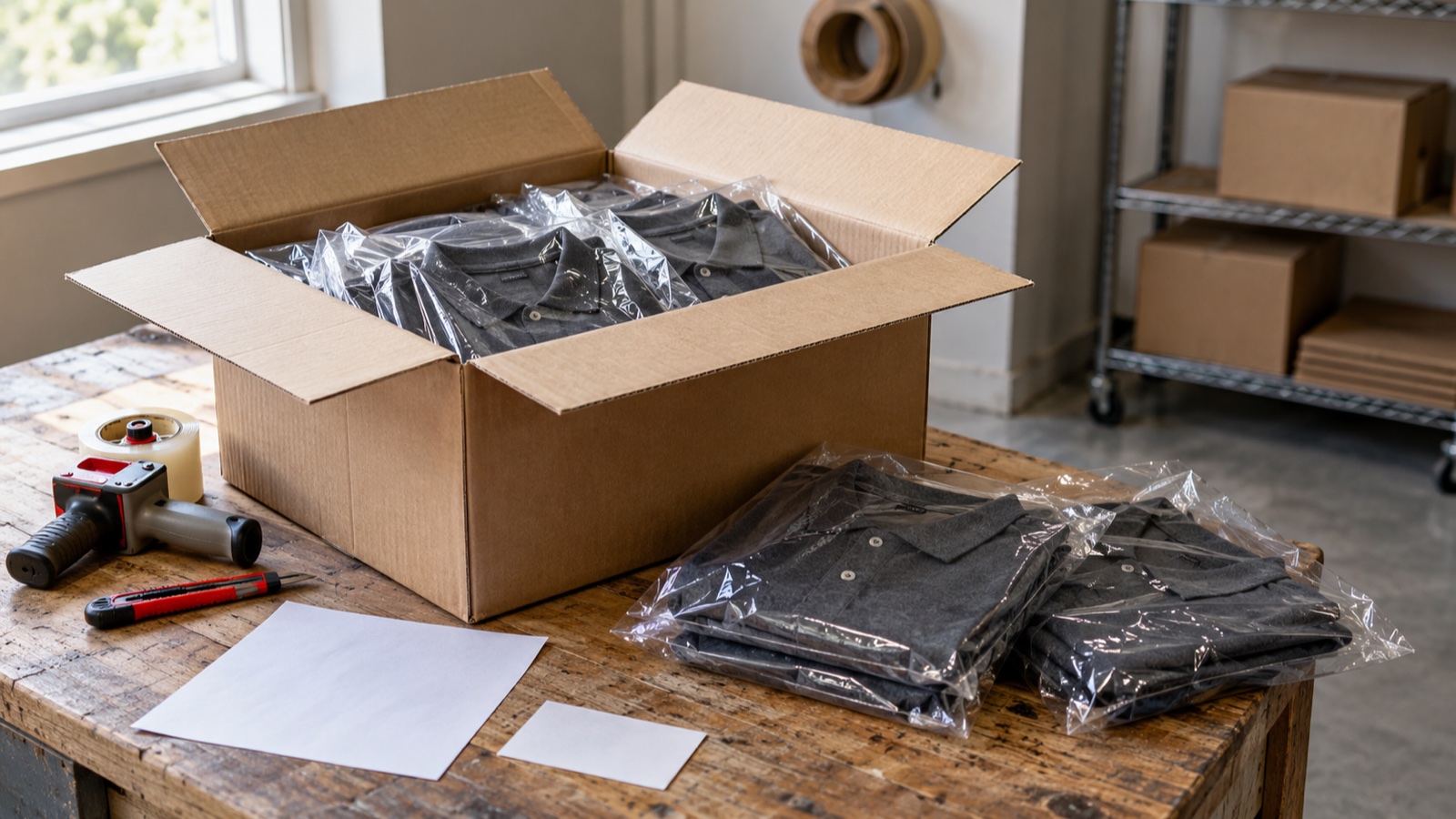
The four costs inside a rush job
The job’s normal price already covers its materials, standard labour and share of overhead. The rush fee should only cover what the rush adds. Keep rent, software and other overheads out of it. They’re already in the base price, and counting them again inflates the fee without making it any more accurate.
1. Rush inputs
This is anything you pay more for because of the deadline: next-day delivery on blanks, an expedited substrate, a same-day courier. On decorated apparel and promotional items, getting the blanks is often the real constraint, not machine time.
2. Changeover from re-sequencing
Breaking into a planned day costs extra setup. Embroidery runs grouped by thread colour get split up. A screen-print job comes off press halfway through. A sign job loses its place in the laminating run. Count the extra setup time at your loaded labour rate, meaning wages plus employer costs such as National Insurance, pension and holiday pay.
3. Absorbing the hours
Pick the route you’ll actually use, and count only that one:
- Overtime: count only the premium above your standard rate. The job’s normal price already pays standard labour for those hours.
- Pushing booked jobs: count the admin of reworking the schedule and contacting each customer, any courier upgrade needed to keep their date, and a goodwill reserve.
- Subcontracting: count the subcontractor’s price minus the internal cost you no longer spend.
A goodwill reserve is a simple expected cost. Ask what you’d credit if a displaced job went wrong, and how often jobs that lose their buffer actually do go wrong. Multiply the two.
4. A premium for the slot
Rush capacity is limited. Binghamton says it offers same-day service whenever possible but has “a limited capacity to provide this service”. Some shops set aside a fixed amount of rush capacity each day or week and stop taking rush work once it’s used. The premium is what you charge for that scarce slot and for carrying the deadline risk. It’s margin, and it’s the part shops most often discount away to win the job.
It applies on the overtime route too. Even when no booked slot is taken, you’re still carrying the deadline risk and spending overtime, which is in limited supply, so the premium belongs on every route.
Because it’s the one line you can’t read off a supplier invoice or a timesheet, give it a rule rather than a guess:
Slot premium = rush production hours × contribution per production hour × a notice tier.
Contribution per production hour is what an ordinary hour of production leaves after materials and direct labour, the money that pays your overheads and profit. A rough figure from your own accounts is enough: take a typical month’s sales, subtract materials and direct labour, and divide by the production hours worked. The notice tier is a share you set that rises as the deadline shortens, for example a quarter with three or more working days’ notice, a half with two, and the full amount for next day. That way a bigger job pays more for the slot than a small one, and a next-day request pays more than a three-day one.
Put together:
Rush fee = rush inputs + changeover + cost of absorbing the hours + slot premium. Then compare it with your house rush percentage and charge the higher of the two.
Worked example: 50 polos in three days
Worked example
A UK embroidery shop has a standard turnaround of 10 working days. A customer wants 50 polos with a left-chest logo, worth £600 ex VAT, in 3 working days. The job needs 4 staff hours on Wednesday. Wednesday is already fully booked with two jobs: a workwear reorder for a flexible trade customer, and team kit for a Saturday fixture. The loaded labour rate is £20 an hour. The employment contract pays overtime at time and a half, so roughly £30 an hour loaded, which makes the premium £10 an hour. Next-day delivery on the blanks costs £25. Breaking into Wednesday’s sequence adds about 1 hour of setup on either route. Rescheduling admin is £10 per displaced job. Pushing the team kit back a day means upgrading its delivery for £15. Goodwill reserve: the shop credits about £60 when a job that lost its buffer goes wrong, which happens roughly one time in three, so £20 per displaced job. The shop’s production hours typically contribute £40 each after materials and direct labour. Its tiers are 25% of that with three or more working days’ notice, 50% with two and 100% for next day, so this 3-day rush carries £10 per rush hour: 4 hours at £10 makes a £40 slot premium. The house rush rate is 25% of order value, which on £600 is £150.
Overtime route: next-day blanks £25, plus extra setup of 1 hour at £20, plus an overtime premium of 4 hours at £10 (£40), plus the £40 slot premium. Built-up rush fee: £125. The house rate of £150 is higher, so charge £150.
Push route: next-day blanks £25, plus extra setup £20, plus rescheduling admin for 2 jobs at £10 (£20), plus the £15 delivery upgrade on the team kit, plus a goodwill reserve for 2 jobs at £20 (£40), plus the £40 slot premium. Built-up rush fee: £160. That beats the £150 house rate, so charge £160.
On the overtime route, the percentage wins. On the push route, the built-up cost wins. If you don’t yet know whether anyone can stay late on Wednesday, quote the push route figure. Quoting £150 and then having to push two jobs leaves you £10 short and two customers unhappy.
Worked example
If the same customer wanted the polos next day, the slot moves to the top tier: 4 hours × £40 × 100% = £160 instead of £40, which lifts the push-route fee from £160 to £280 before any extra cost of getting blanks in overnight.
Notice what isn’t in the calculation. The displaced jobs are still produced at standard labour, which their own prices already pay for, so that time isn’t counted again. Overheads aren’t in it either.
Now compare an owner who prices the rush as overtime only: 4 hours at £30, so £120. On the push route that’s £40 short of the real cost. It also teaches the customer that a three-day turnaround costs £120.
Where flat percentages fail: small orders
A percentage scales with the order value. The disruption doesn’t.
Worked example
Same shop, same full Wednesday, same 3 working days’ notice. This time the request is 12 embroidered caps worth £150, with the caps already in stock. It’s 1 hour of production, and it bumps only the workwear reorder. It still needs a full hoop and thread setup in the middle of the day: £20. Rescheduling admin £10, goodwill reserve £20, slot premium 1 hour at £10, so £10. Built-up fee: £60. The 25% house rate gives £37.50, so a percentage-only fee leaves £22.50 of disruption unpaid.
That’s why a minimum rush fee matters. If a customer won’t pay £60 to get a £150 order seven working days early, the date probably matters less to them than it first sounded. Offer the next normal slot instead.
The three-question rule for the phone
Ask these in order. If any answer is no, decline or offer an alternative.
Can it fit without breaking a committed date?
Look at the production board before you answer. The real question isn’t “can we do it” but “whose date moves”. If a committed date moves, the displaced customer has to agree to the new date before you say yes to the rush. A useful line is: “Let me check the board and come back to you within the hour with a firm answer and a price.” A fast, clear answer matters on rush work as much as on any quote, as covered in why your quoting process may be losing you customers.
Are stock, artwork and approval in hand today?
The rush clock should start at proof approval, not at the first phone call. Write that into your terms, along with a daily cut-off time for approved artwork and confirmed stock. If you accept a rush with blanks still unconfirmed and then miss the deadline, you lose the fee and probably the customer too. Slow sign-offs are their own cost, and artwork approvals over email explains why they stall.
Does the fee cover the full disruption, and is this customer worth it?
Charge the higher of the two numbers. Then weigh the customer: how often they order, whether they usually order on time, and whether this rush is a one-off. If the rush exists because the customer sent artwork late, the fee still applies. Waiving it teaches customers to leave things late.
When the answer is no, you still have options. You can offer the next available date, a split delivery with part of the order now and the rest on the standard date, or a stock item you already hold.
Before you tell staff to work late
The overtime route depends on your people, and UK rules limit how far you can stretch it. According to GOV.UK’s guidance on overtime, employers don’t have to pay extra for overtime, but a worker’s average pay for all the hours they work must not fall below the National Minimum Wage. The same guidance notes that overtime rates are usually set in the employment contract. From 1 April 2026 the National Living Wage for workers aged 21 and over is £12.71 an hour.
Adult workers generally can’t work more than 48 hours a week on average, normally averaged over 17 weeks, unless they’ve chosen to opt out, according to GOV.UK’s guidance on maximum weekly working hours. Weeks full of rush work eat into that average, so “just work late” is a limited resource, not an unlimited one. This is general guidance only. Check your own contracts and obligations, and take advice if you’re unsure.
Make rush work visible
Rush jobs done as favours for regular customers rarely get recorded, so their cost stays hidden. For one quarter, log every rush request: the customer, the fee quoted, whether you said yes, which jobs it displaced, and whether any of those jobs ended up late. If the same production stage keeps taking the hit, that’s your constraint, and finding the bottleneck in your print shop workflow shows what to do about it.
When you do push a job, tell that customer about the new date before they have to chase you. A call they didn’t have to make protects the relationship far better than an apology after they’ve chased.
Your next step this week: write your rush policy on one page. Include your standard turnaround, house rush percentage, minimum rush fee, your contribution per production hour and notice tiers for the slot premium, artwork and stock cut-off, the three questions, and what happens to the rush fee if you miss the rushed date yourself. Show the rush fee as its own line on the quote and the invoice, so the customer can see what they’re paying for and you can see what rush work earns. Then put the policy next to the phone.
Explore TaggIQ orders See how TaggIQ approaches orders and production, and decide whether it fits the way your shop schedules work.
Frequently asked questions
A regular customer expects rush work for free. How do I start charging?
Give notice and put it in writing. Send the new policy with their next quote, explain that rush slots push other customers' work, and apply the fee from a set date. If you want to reward loyalty, offer longer standard turnarounds booked in advance or a reserved monthly slot rather than discounting the rush fee itself.
What if the delay was our fault, not the customer's?
Then it isn't a rush job you can charge for. It's recovery work. Absorb the cost, log it alongside your paid rush jobs so you can see what it costs you, and fix whatever caused the delay. Only charge rush when the customer's request or the customer's own lateness created the short deadline.
The customer says another shop will do it for less. Should I match?
Discounting the rush fee removes the only thing that pays for the disruption to your other customers. Check that the other offer includes the same garment, decoration and delivery date. If it does and you still can't cover your built-up cost, let that one go and protect the slot for customers who order on time.

Dave
Dave writes for TaggIQ about running a profitable print, promo, sign and embroidery business: costing and estimating, margins, production flow, order workflows, pricing decisions and keeping customers coming back.