In this article 10 sections
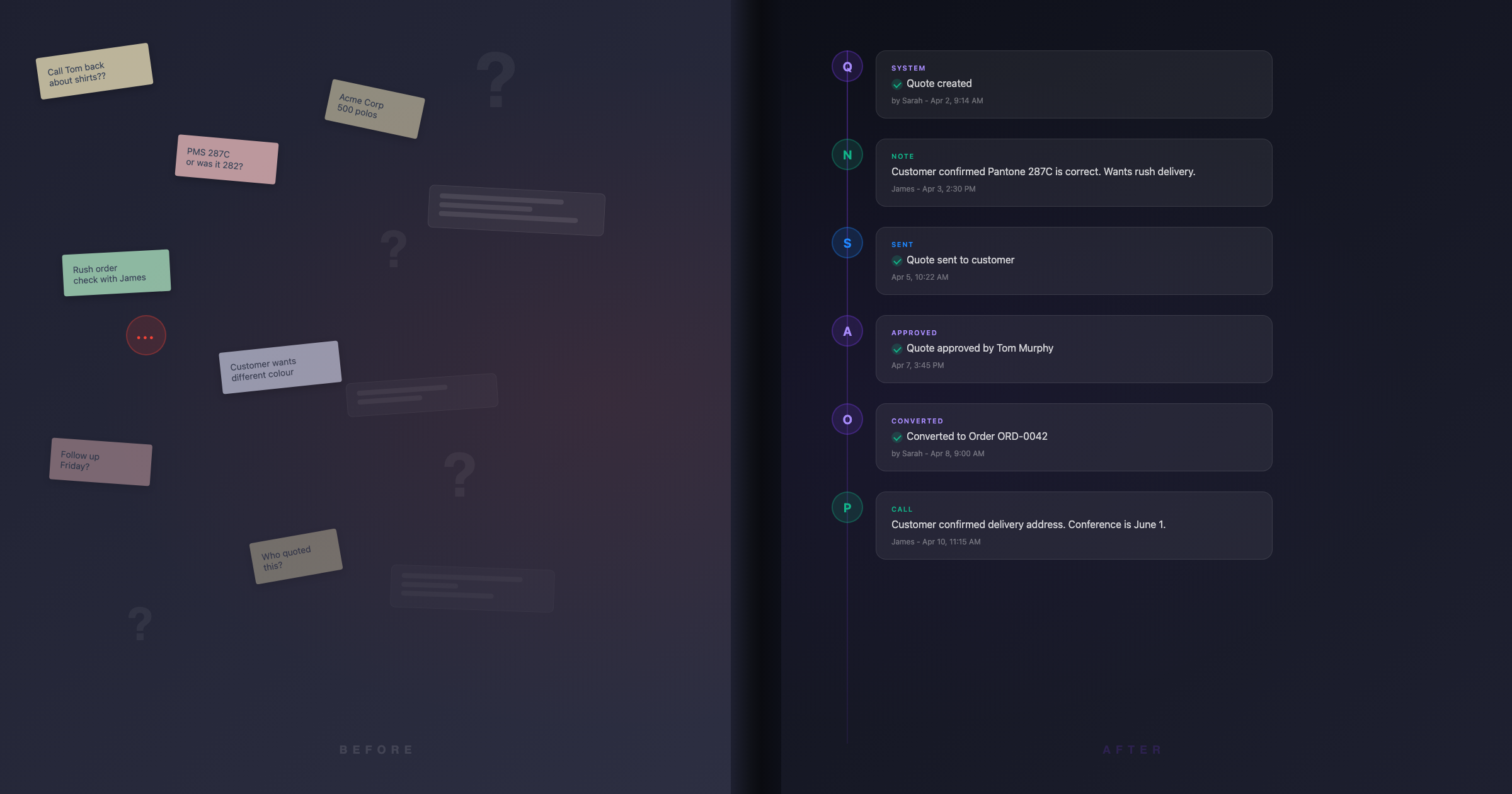
Customer context is lost when it lives in one person’s head or one person’s inbox. Your team keeps it by writing each decision down where the work happens: on the quote, the order and the invoice it belongs to, in a sentence or two, at the moment it is made. Then anyone who picks up the phone can see why the customer switched colours, what they agreed to pay for a rush, and why the last quote was lost.
A familiar phone call
Here is a call many shops will recognise. A good customer rings about their order. The person who quoted it is out, so someone else answers, opens the order and sees line items, quantities and a total. Nothing about why the customer moved from navy to black, the rush delivery they agreed to pay for, or the colour match they asked for. The customer is put on hold, then asked to explain it all again.
That pause is how a customer starts to wonder whether you really know them.
This is not a training problem
The first instinct is a better hand-off: a shared document, a weekly catch-up on active accounts. Those help, but they treat the symptom. The cause is that customer knowledge lives in people, not in the record of the work.
Ask yourself:
- If your best salesperson left tomorrow, how much customer knowledge would leave with them?
- When a customer says “same as last time”, can anyone else look that up?
- When a quote is lost, is the reason written anywhere?
What it costs
Repeat business
Reorders depend on the customer feeling known. When they have to repeat their logo, colour and delivery preferences, they start looking elsewhere.
Hand-offs
Holidays, promotions and departures leave accounts with someone who has no history. A short hand-off meeting cannot cover every open job.
Repeated mistakes
“We talked about this last time: the logo is too big.” If last time lives in an email nobody can find, the same mistake happens twice.
Lost-quote lessons
The salesperson knows why a quote was lost, perhaps a competitor waived a setup charge. If that reason is never written down, next quarter’s pricing repeats it.
What keeps the context
Not a separate notes spreadsheet, and not a chat channel per customer. The context belongs on the record of the work:
- A note on the document. One or two sentences on the quote or order when a decision is made: what changed and why.
- Calls logged where they happened. “Called: wants the colour matched to their brand guide” on the quote, not in someone’s notebook.
- A reason on every lost quote. Three words is enough: “lost on setup charge”.
- One history per customer. Quotes, orders and invoices for the same customer in one place, so the next person can read the story in order.
This is easier when the quote, order and invoice are one connected record. TaggIQ runs quote, order, invoice and payment in one workflow without re-keying, so notes on a quote are still there when it becomes an order. The print and promo workflow guide walks through that whole path.
Where an agent fits
You can start with one custom AI agent around the tools you already use. The TaggIQ platform is optional.
Quote Agent (proposed build)
Context matters most when a quote goes quiet. For your shop, we could build a Quote Agent that reads the quote, the email thread and the customer’s history before it drafts a follow-up, so the reminder mentions what the customer actually asked for. You approve each draft before it is sent, and it stops as soon as the customer replies. It drafts alongside you; a person decides.
If keeping customers warm between orders is the job you would hand over first, the assessment below is where we look at it with you.
Prakash
Founder of TaggIQ. He built POS, commerce and AI platforms at Toast and VMware/Broadcom, and is building AI agents and an AI-native platform for print, promo, sign and embroidery shops from close trade conversations and workflow research.